

Budapest rewards curious eaters with much more than its famous goulash and sweet pastries. Neighbourhood bakeries, traditional lunch counters and lively wine bars reveal the habits behind everyday Hungarian cooking. Even in the historic Castle District, 21 Magyar Vendéglő shows how familiar recipes can feel fresh without losing their character. The most memorable meals often begin with a dish you have never heard of and end with an unexpected new favourite.
Start the morning at a neighbourhood bakery
Skip the elaborate breakfast and follow the smell of fresh baking into a local pékség. Order a kakaós csiga, the soft, cocoa-filled spiral found in bakeries across Hungary, or choose a warm pogácsa, a small savoury pastry that might be made with cheese, potato or pork cracklings. Both are easy to eat on the move, but they deserve a few unhurried minutes with a coffee. They also offer a glimpse of daily routines that rarely make it onto restaurant menus.
Order a steaming bowl of fish soup
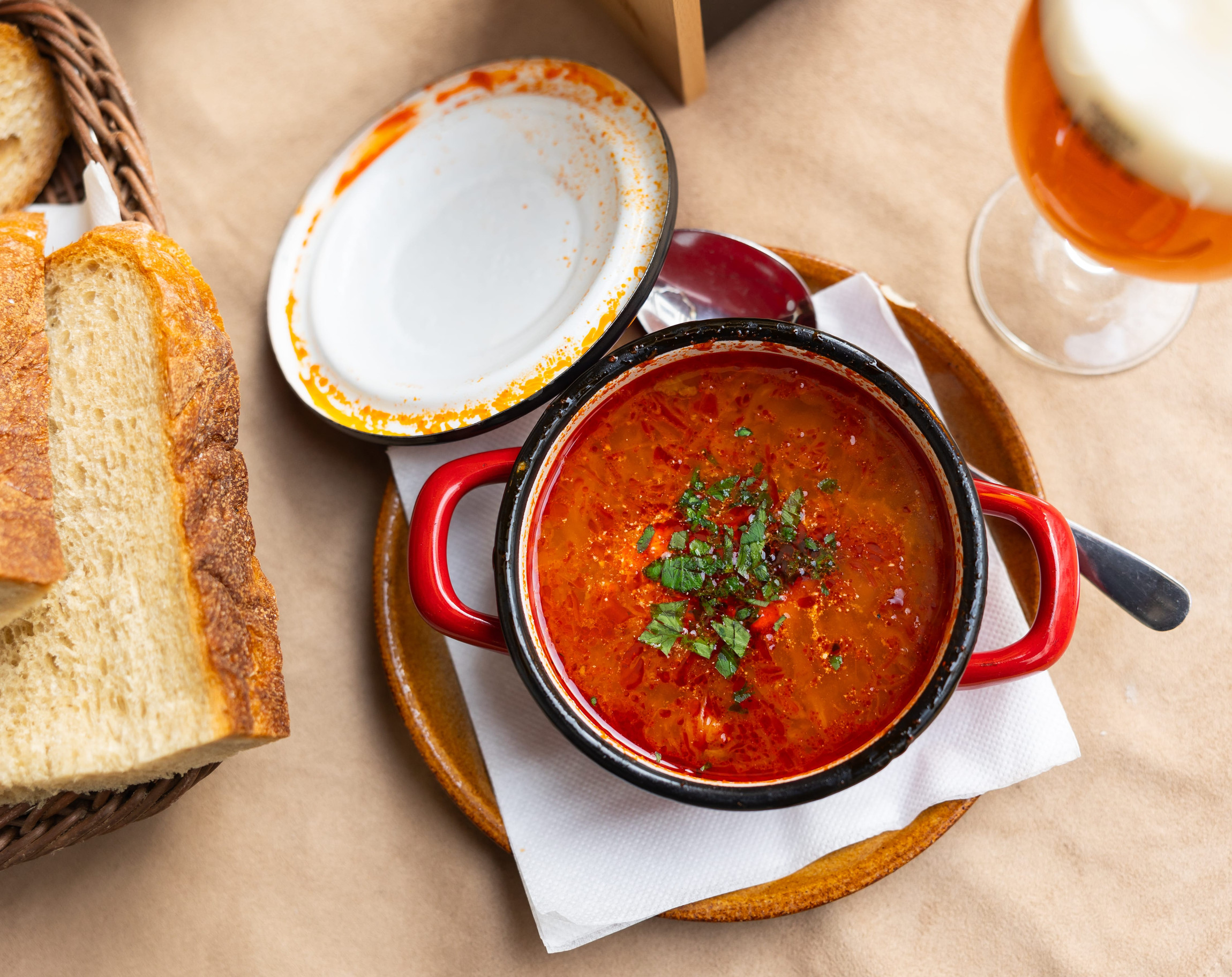
Few dishes demonstrate the boldness of Hungarian paprika cooking better than halászlé. This deep-red fish soup has several regional traditions, with recipes and textures varying around the country. Its intense broth is particularly satisfying on a cool day, often accompanied by fresh bread and extra hot pepper for those who enjoy a stronger kick. In the Buda Castle District, 21 Magyar Vendéglő is a Hungarian restaurant Budapest can be proud of, serving Hungarian classics in a contemporary setting. Its fish soup is one way to encounter a dish deeply rooted in the country’s food culture.

Discover the charm of a lunch counter
A traditional lunchtime canteen, or kifőzde, offers a different side of the city’s food scene. Look for főzelék: vegetables such as peas, lentils or green beans cooked into a thick, comforting dish, sometimes served with a fried egg, meatballs or another topping. It has no neat English equivalent, sitting somewhere between a stew and a substantial vegetable side. Simple, filling and endlessly adaptable, it is the sort of food that tells you what people actually eat on an ordinary weekday.
Try a savoury pancake instead of a sweet one
Hungarian pancakes are usually thin and tender, but Hortobágyi palacsinta turns them into a substantial savoury course. The pancakes are filled with seasoned meat and finished with a paprika-rich sauce, often enriched with sour cream. It is a surprisingly elegant way of bringing familiar ingredients together. Order it as a starter if you plan to sample several dishes, or let it take centre stage at lunch. Either way, it is an excellent reminder that pancakes need not belong to breakfast or dessert.
Explore the savoury side of Jewish-Hungarian cooking
The historic Jewish Quarter is a good place to discover sólet, a slow-cooked bean dish associated with Jewish culinary tradition. Hungarian versions commonly include beans, barley and smoked meat, with variations shaped by family recipes and dietary customs. Traditionally connected to the Sabbath, it is hearty, deeply flavoured and far removed from the quick snacks of a sightseeing day. Seek out a kitchen that prepares it with care and enjoy the sense of history carried by a single bowl.
Share bread and körözött before dinner
A relaxed evening can begin with körözött, a paprika-seasoned fresh cheese spread commonly made with túró, sour cream and seasonings such as caraway or onion. Served with bread and crunchy vegetables, it makes an appealing introduction to Hungarian hospitality. Its creamy texture and gentle sharpness are especially welcome alongside a cold drink. Rather than ordering a large meal immediately, enjoy a few simple bites and the easy rhythm of a neighbourhood terrace.
Save room for túrógombóc
If you have only tasted Budapest’s famous cakes, túrógombóc offers a different kind of sweetness. These tender dumplings are made with túró, a fresh curd cheese, then typically rolled in toasted breadcrumbs and served with sour cream and sugar. They are delicate rather than extravagantly rich, with a pleasing contrast between soft centres and lightly crisp crumbs. A good portion is comforting, nostalgic and satisfying without needing layers of icing or chocolate.
End the evening with a fröccs
For a distinctly local drinking ritual, order a fröccs, the Hungarian wine spritzer. It combines wine with soda water, and its many traditional ratios have their own names. On a warm evening, a glass in a courtyard bar feels refreshingly straightforward, especially when shared over a long conversation. Hungarian wines also deserve attention at dinner, and the exclusively local wine selection at 21 Magyar Vendéglő offers plenty of opportunities for discovery. It is the kind of Hungarian restaurant Budapest does particularly well, bringing together time-honoured flavours, thoughtful cooking and relaxed hospitality.